
One YouTube Video Beat 3 Months of SEO


At Searchhouse, we discussed how a single video can yield high-growth assets like a blog, shorts, or AEO presence. This here, for example, is one of those blogs we built from a video.
This piece was written from a transcript, involved some manual writing and editing on our old clanking keyboards, and had some help from AI models.
Luis: Today I'm talking with Eli about organic growth strategies for 2027. Is there still room for organic growth and can organic be an alternative to just paying for ads?
Google’s first page now mixes in videos, social posts and AI answers
Luis: My question is about YouTube in 2026 and 2027 as an organic growth strategy.
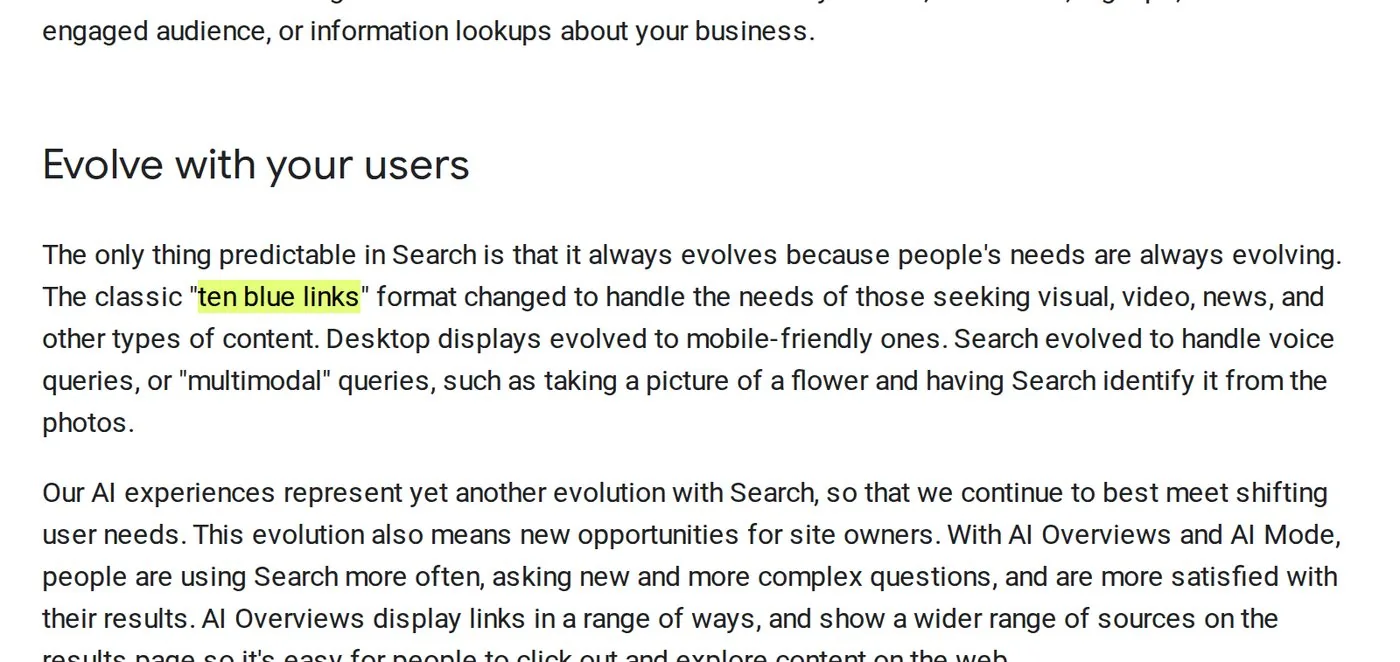
YouTube is a great organic strategy. In 2026, Google's changed up how the content they deliver on their first page or in their feed. They've changed up and they've added a whole bunch of different sources. Now we see X posts there, we see Instagram posts, we see YouTube videos. According to Google Search Central Blog, “The classic “ten blue links” format changed to handle the needs of those seeking visual, video, news, and other types of content.”
There are a lot of different ways that you can get to the top. YouTube is one of those ways because it's probably one of the better ways because it is a Google product. And Google is pushing social media and video content heavily. According to YouTube Official Blog, “YouTube has been #1 in streaming watchtime in the U.S. for nearly three years.”
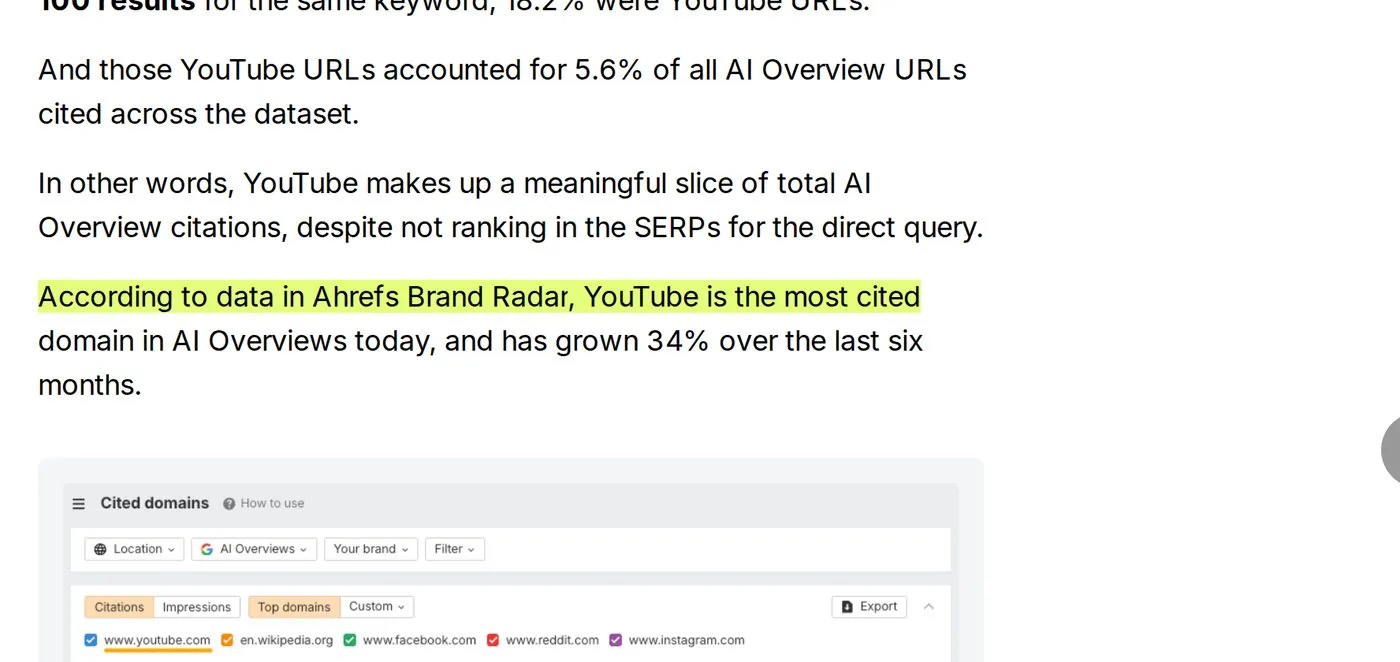
You'll see YouTube videos show up a lot and rank for that content. Where in the past, we were all fighting with blogs or web pages to get those rankings. And now we see it, the third position or even the first position, a YouTube video. According to Ahrefs, “YouTube is the most cited domain in AI Overviews today, and has grown 34% over the last six months.”
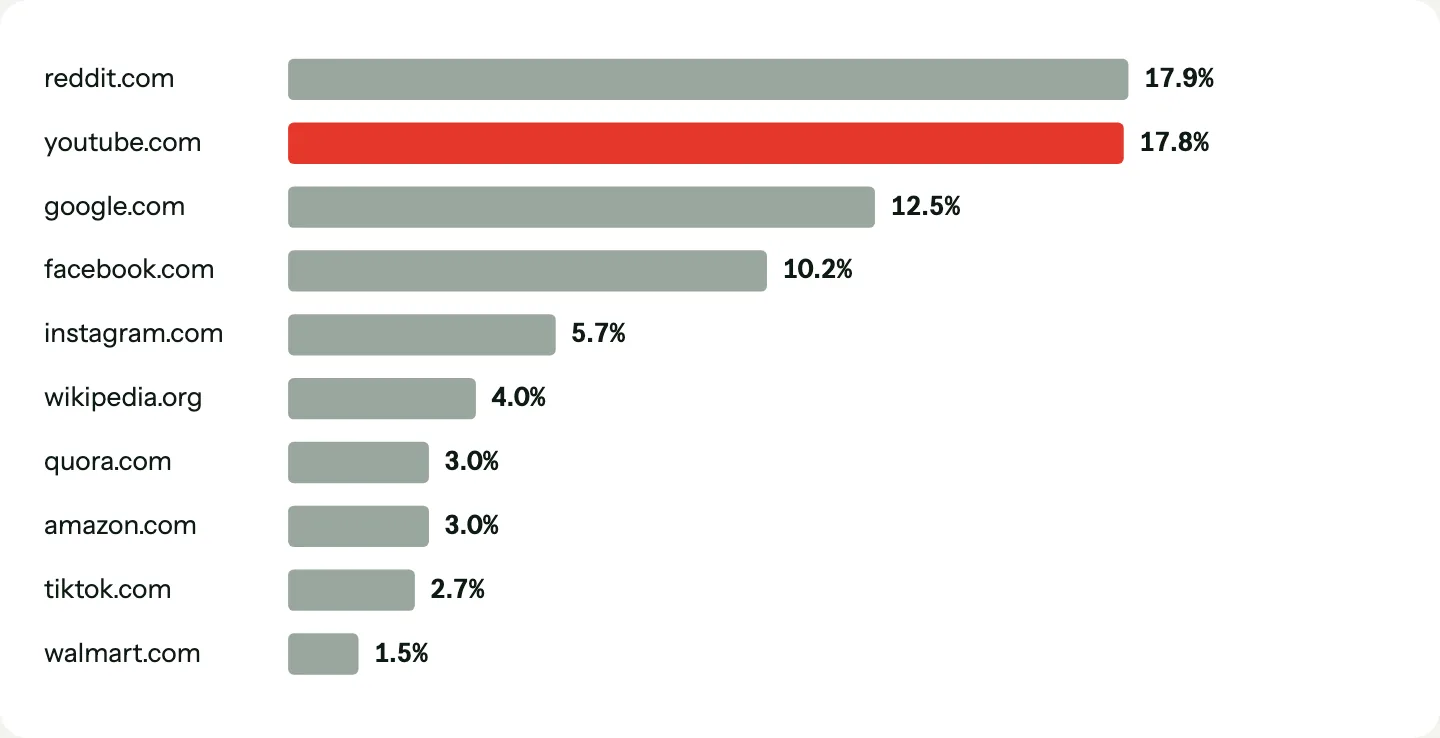
It looks like it's getting preferential treatment because it's a high domain site. It's a Google product and it's video content, which people really like in 2026. It's a really, really strong channel. According to Ahrefs, “the presence of an AI Overview in the search results correlated with a 34.5% lower average clickthrough rate (CTR) for the top-ranking page”.
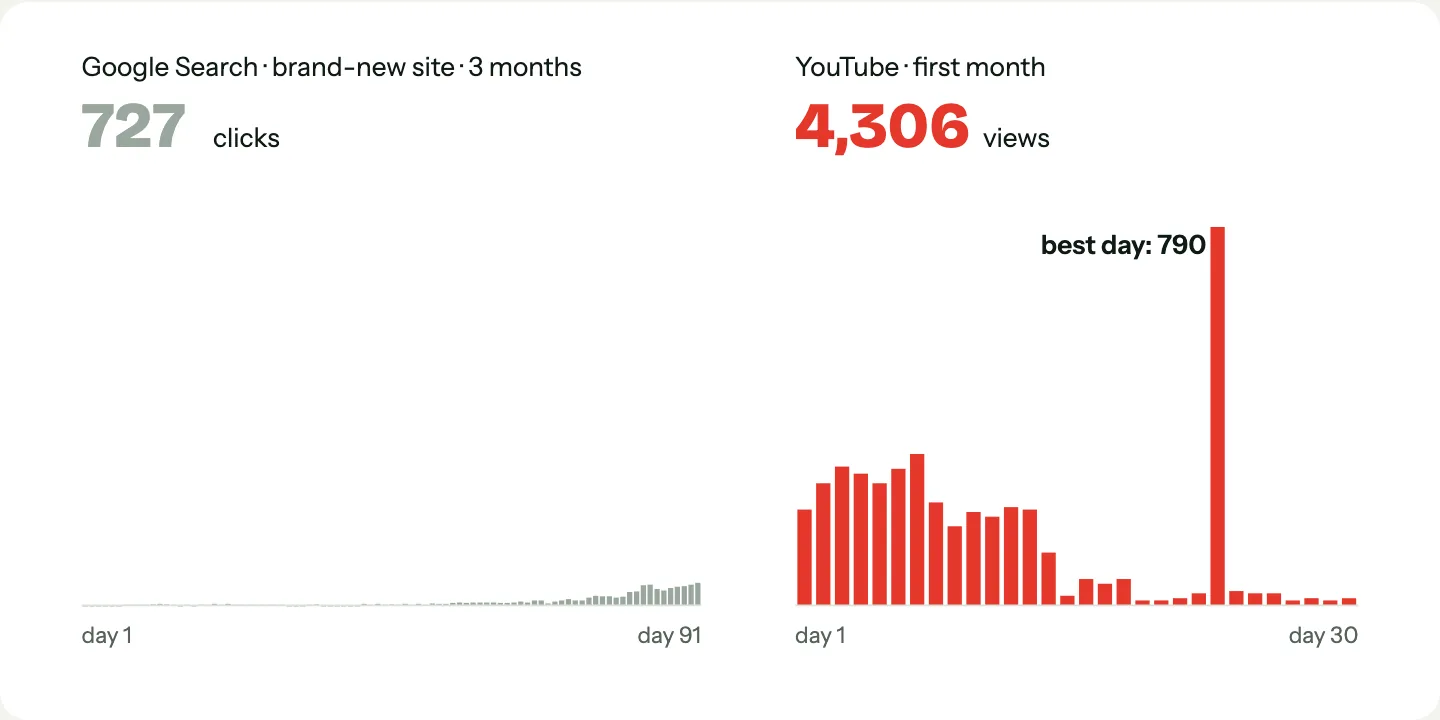
One YouTube video got more views in a day than a brand-new site got clicks in 3 months
Luis: A site got, in three months, about as many clicks as one YouTube video got views in a single day.
We've done a small case study that can compare if we're posting written content on your website or versus posting on YouTube, the difference there. We launched the site and ran it for three months, did some SEO stuff on it, and we probably got about 700 clicks.
It's a brand new site. This is pretty standard. It takes a longer time to rank with SEO content, especially for a brand new domain. It does stack over time, but that's the result.
You can have one video really outperform.
With a YouTube channel, it can be quite different. For a YouTube video, we managed to pull in 4.3 thousand views within a month. And the majority of that coming from one video. You can have one video really outperform. If you're looking at views, putting aside clicks, outperform an entire webpage. And with a YouTube video, you can do that these days, quite cheap and efficiently.
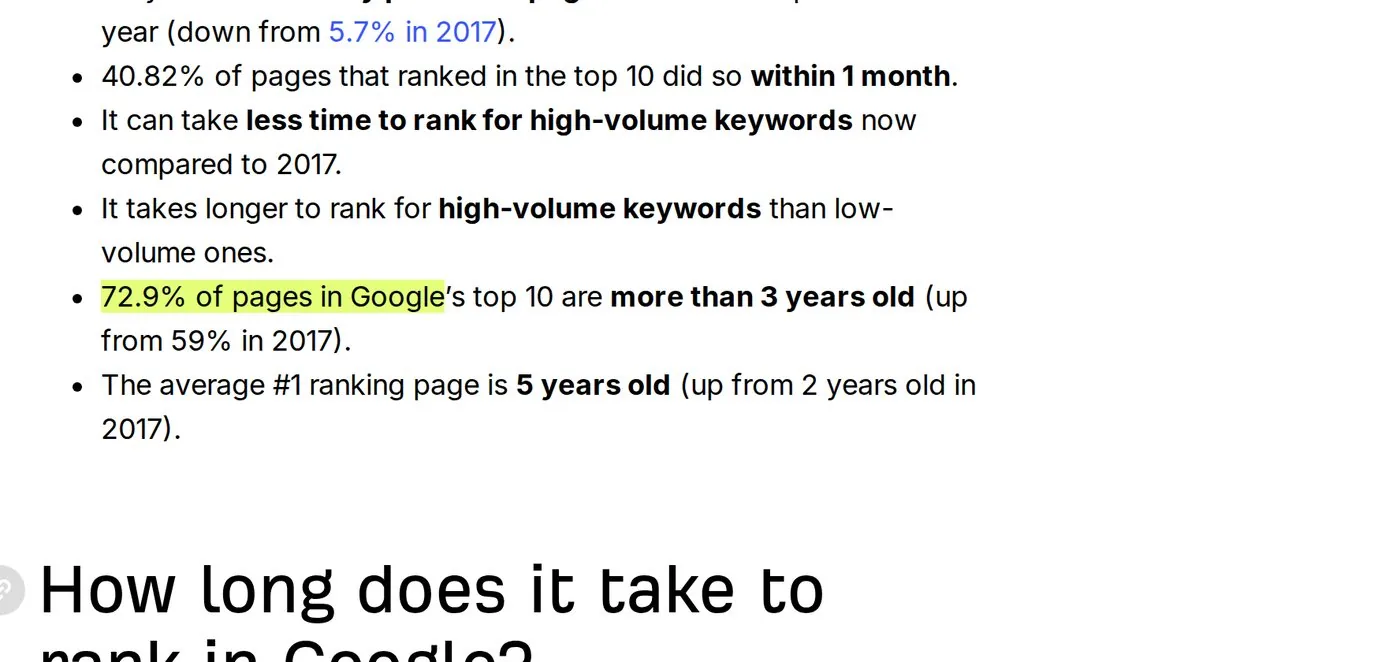
According to Ahrefs, “Only 1.74% of newly published pages rank in the top 10 within a year (down from 5.7% in 2017)”, and “72.9% of pages in Google’s top 10 are more than 3 years old (up from 59% in 2017).”
Brands use YouTube to jump past the sites that own page one
Luis: That video was just a talking head video. Maybe this conversation could be the same, a replacement for a keyword that's hard to rank for with a blog or a page.
What brands are doing more niche and in very high competitive spots, instead of trying to compete against these websites that are very established, have owned this real estate on the first page of Google for a long time. They're very hard to compete with. They do have great content.
What people are doing are turning to alternative routes, whether that's LinkedIn, YouTube in this case. And they're formatting in a similar way. In the same way that you would target keywords with a blog or a webpage, they're doing that to YouTube.
They're leapfrogging everybody using the domain authority of YouTube, using the preferential treatment Google's offering YouTube.
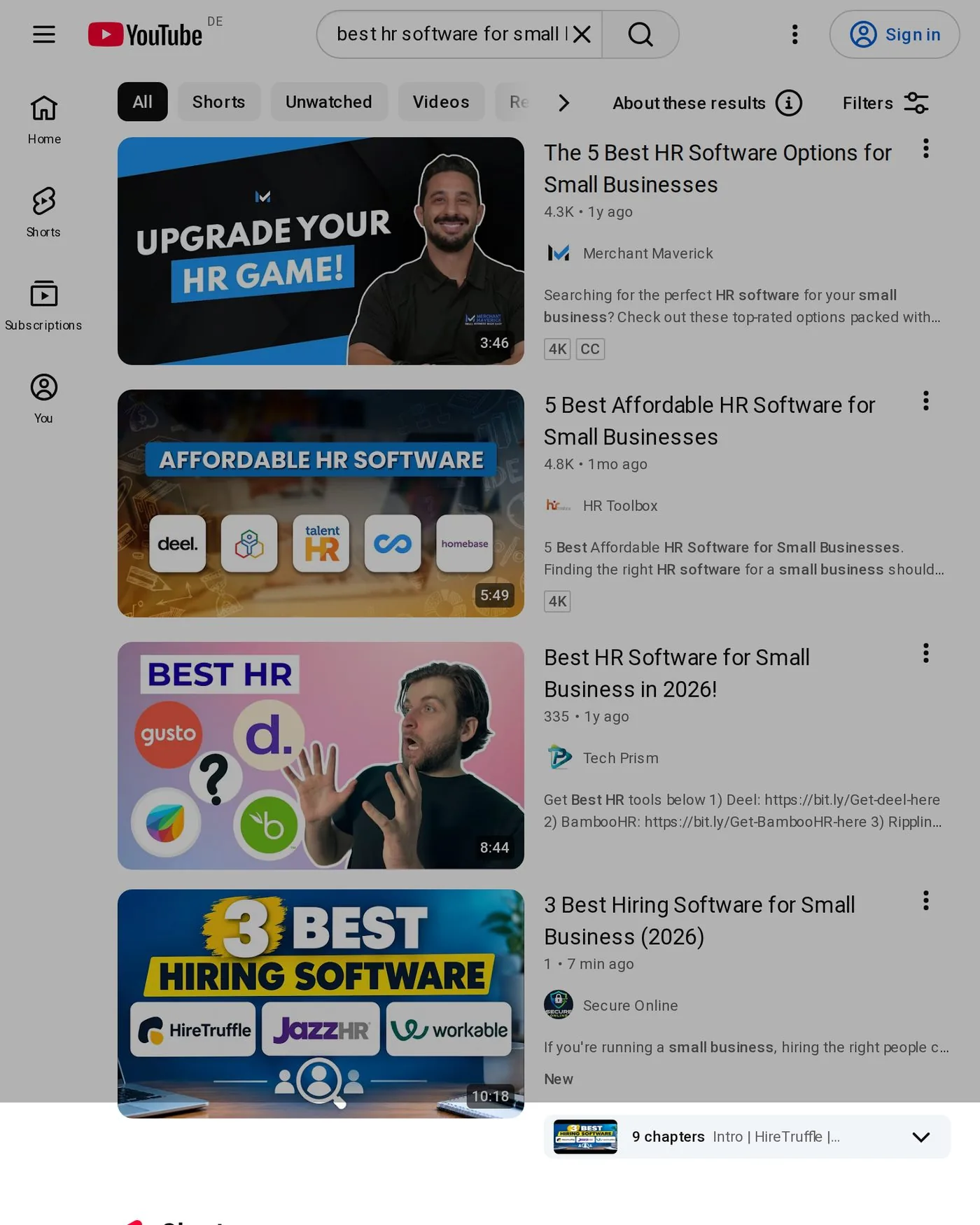
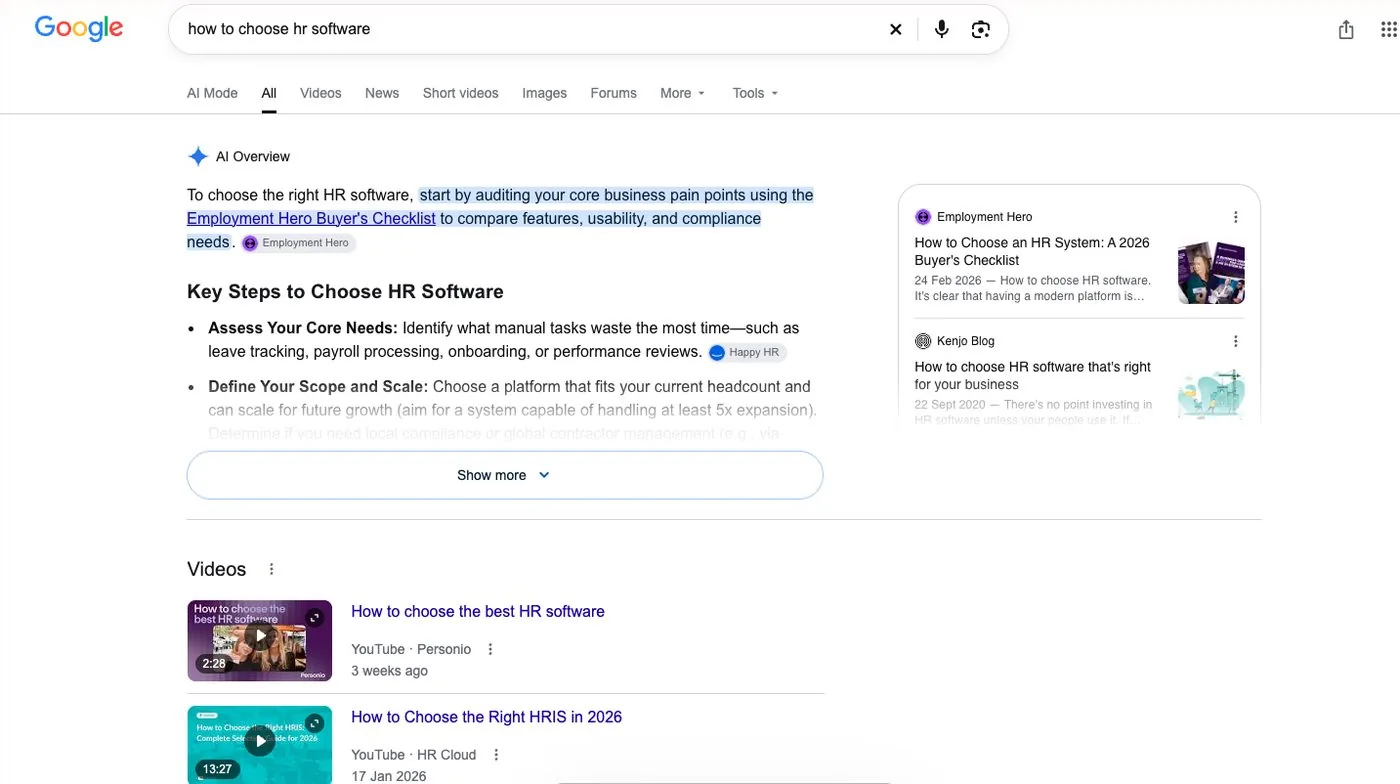
And Google's pulling that transcript and using that for its AI overview. And it's even placing it on the first page. They're leapfrogging everybody using the domain authority of YouTube, using the preferential treatment Google's offering YouTube. And they're leapfrogging all those established sites and brands and putting their name out there.
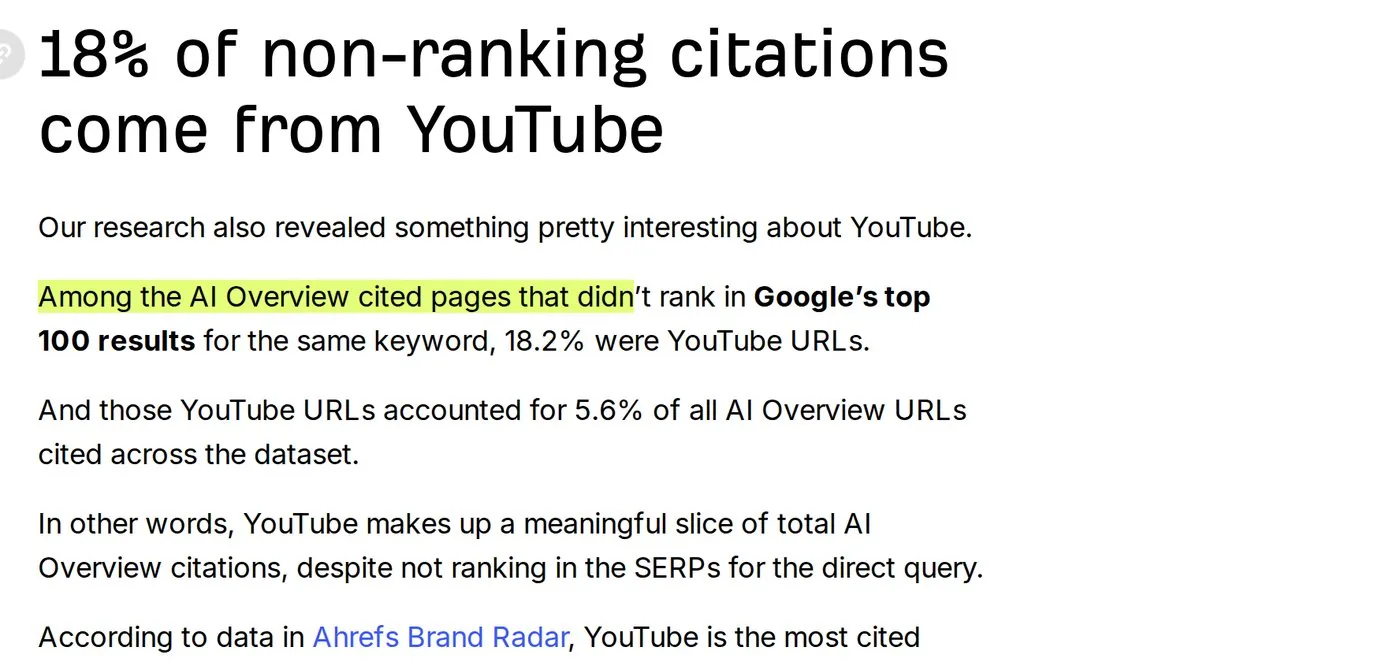
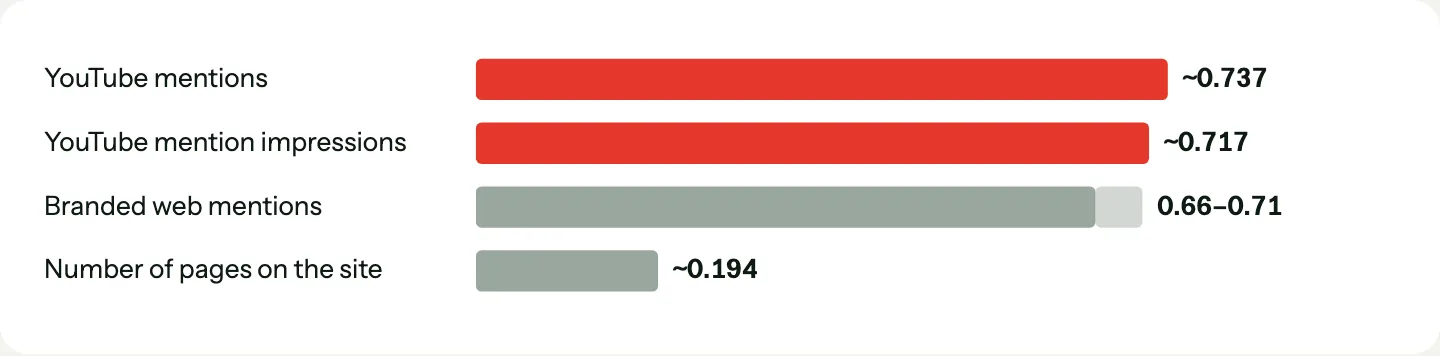
According to Ahrefs, “Among the AI Overview cited pages that didn’t rank in Google’s top 100 results for the same keyword, 18.2% were YouTube URLs”, and “our research of 75K brands revealed that mentions on YouTube—in video titles, transcripts, and descriptions—are the strongest correlating factor with AI Overview visibility.”
Video shows there are real people behind the brand
Luis: It's also a good way for YouTube to show that you're a real brand.
I think in 2026, it's all about diversification.
I think in 2026, it's all about diversification. People were trying to game AEO, the AI search stuff with the blogs, and that was working in the beginning. But what we had was this huge oversaturation of AI content. Everybody was producing it. And it was a lower quality output that the AI engines were offering. Same with Google as well.
According to Google Blog, “You’ll now see 45% less low-quality, unoriginal content in search results versus the 40% improvement we expected”. And in the words of Google Search Central, “Scaled content abuse is when many pages are generated for the primary purpose of manipulating search rankings and not helping users.”
They recognize this. People are trying to game the system. Now we need to look at all these different indicators for a brand to figure out where they rank and figure out how we're going to speak about these brands. Having a YouTube channel, having a LinkedIn page, having social media, having Google Maps, all these different assets that make up a brand, business, service. They're looking at all of this stuff.
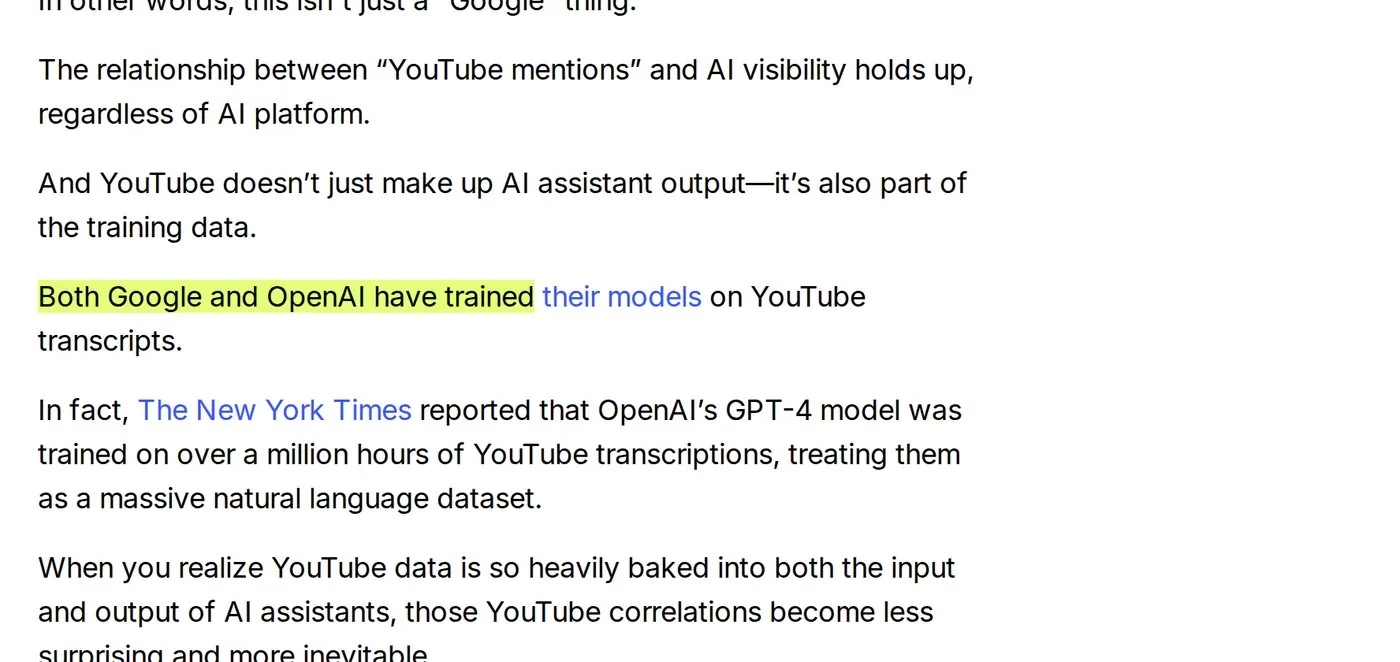
And now AEO or AI search engines and Google, they can pull the transcript straight from Google. They have access to that. They can read that content and then pull that in chat. According to Ahrefs, “Both Google and OpenAI have trained their models on YouTube transcripts.”
The important point is that it's very easy to create content now and mid level content, which is possible. But that means it raises the bar for everybody else. You should be focused on creating the highest quality content and what these search engines are looking for, whether that's AI search or Google search. They want fresh, new ideas, new insights, new content. According to Graphite, “only 7% of the articles ranking number one are AI-generated.”
Video is a great way to do that, especially if you're sitting down with an expert or you're actually doing the research, putting together something that's fresh based on new data. Google says that specifically in its documents. It says, hey, create fresh, unique content with expert insights. That's what it wants. If you do that, it will reward that content.
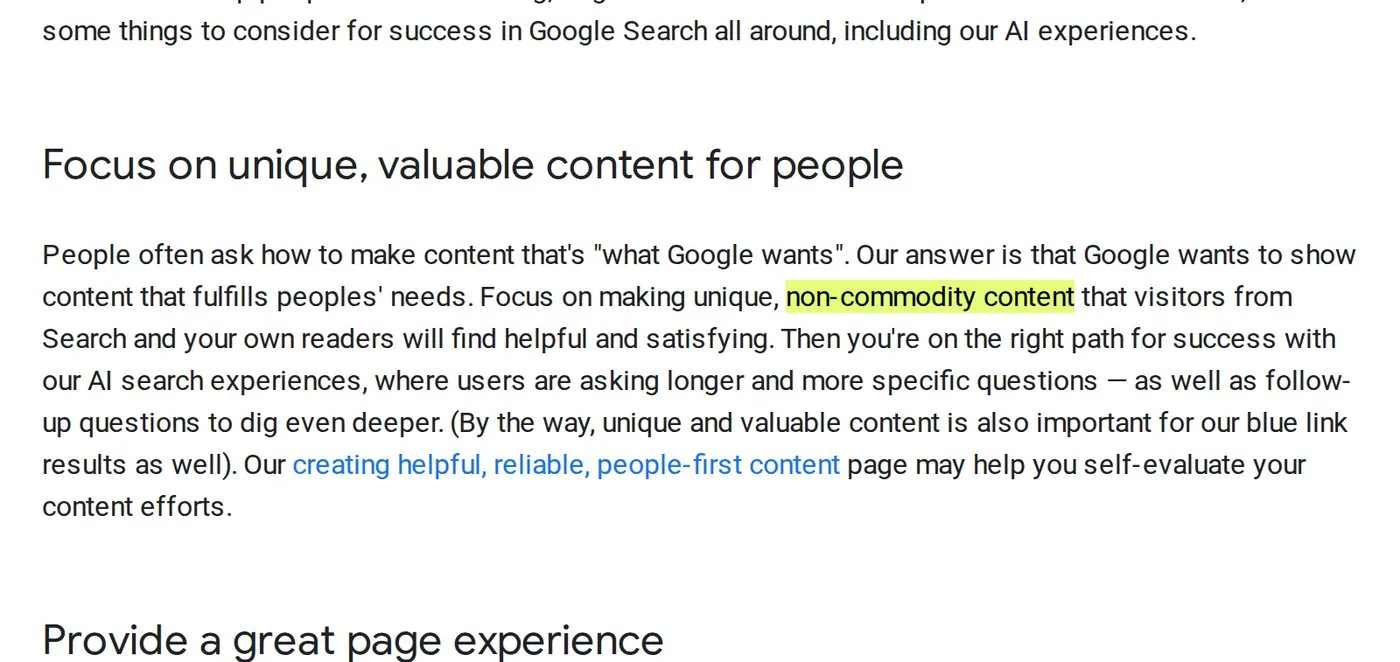
According to Google Search Central Blog, “Focus on making unique, non-commodity content that visitors from Search and your own readers will find helpful and satisfying.” According to the same site, “Does your content clearly demonstrate first-hand expertise and a depth of knowledge”.
If you have a catalog of video content where you're either interviewing experts or talking about some type of industry topic and you're going in depth and you're having these fresh, new conversations, those transcripts are valuable. According to Ahrefs, “The average age of URLs cited by AI assistants is 1064 days, compared to 1432 days for URLs in organic SERPs”.
One conversation becomes a video, Shorts and a blog post
Especially if you are in a very high competition niche, whatever industry it is, it is even more important that you have these expert level conversations or that you are writing this expert level stuff to position your brand as an authority on this subject. Otherwise, you're never going to get recommended. You really need to think about what you're going to bring that's new to the table.
Real conversations are great. They're great because there's a lot of new insights that come out of those discussions that AI hasn't been trained on yet. And they're looking for data to train on. If you give them that data, then your brand's going to be in a winning position.
Real conversations are great. They're great because there's a lot of new insights that come out of those discussions that AI hasn't been trained on yet.
Luis: And you'll get insights nobody else has because you're asking experts for them.
When you're creating content, especially content to rank and for search, there's so many details involved. There's so much work that you can do. Most brands don't have a team of 10 people to focus in on that or even a team of two people to focus in on that.
The winning strategy is to focus in on content pieces that can either be reusable or that have these downstream effects. YouTube has the downstream effect of not only is it in the YouTube ecosystem and it can get views and generate clicks from there, but it's also in the Google search ecosystem. And now it can generate clicks and views from the first page.
You have the downstream effect of how it shows up in AI search. YouTube is a great way to do that because we know you can get to the front of the first page. And we know we can turn it into a whole bunch of different assets that can be reused.
And it's not a huge time sink. That's the best way to go, especially right now, while it's getting preferential treatment. According to YouTube Official Blog, “there are more than 1 billion monthly active viewers of podcast content on YouTube”, and “YouTube Shorts is now averaging over 200 billion daily views”.
This post is one of those assets. The same conversation also became Shorts, like this one:
ChatGPT, Claude and AI Overviews read YouTube transcripts
Luis: With video you can get into AI overviews or even into a recommendation from Claude or ChatGPT.
ChatGPT, Claude, all those tools have access to those transcripts and they're trained on that data. It's another avenue into that. According to Ahrefs, “OpenAI’s GPT-4 model was trained on over a million hours of YouTube transcriptions”.
If you're a service or product business and you're saying you're trying to rank in terms of what ChatGPT recommends back to a customer, for example. And it's giving a list and you're not part of that list. It's a whole bunch of other competitors.
Maybe you need to think about different ways that you can get involved in that. Maybe these engines are looking at your site and saying, there's not enough diverse content or there's not enough authority signals. According to Profound, “66% of cited turns have 1–4 unique sources”. and “85% of YouTube citations point to specific videos. Channel pages account for just 5%.”
I just know from the SEO community, there's a lot of people that are focused in on that heavily. They're making YouTube videos with the keywords in the title specifically to rank on the first page. And that's doing really, really well for them. According to Ahrefs, “YouTube’s advice is to use the most relevant search terms in your titles and descriptions—as long as they’re accurate and not excessive.”
And to have signals from YouTube pointing back to your site, that's a high authority signal. According to Ahrefs, “Branded web mentions still correlate highly with AI visibility (0.66–0.71).”
Is YouTube worth it in 2026 and 2027?
Luis: So Eli, what do you say? YouTube is a good platform to grow organically in 2026 and 2027?
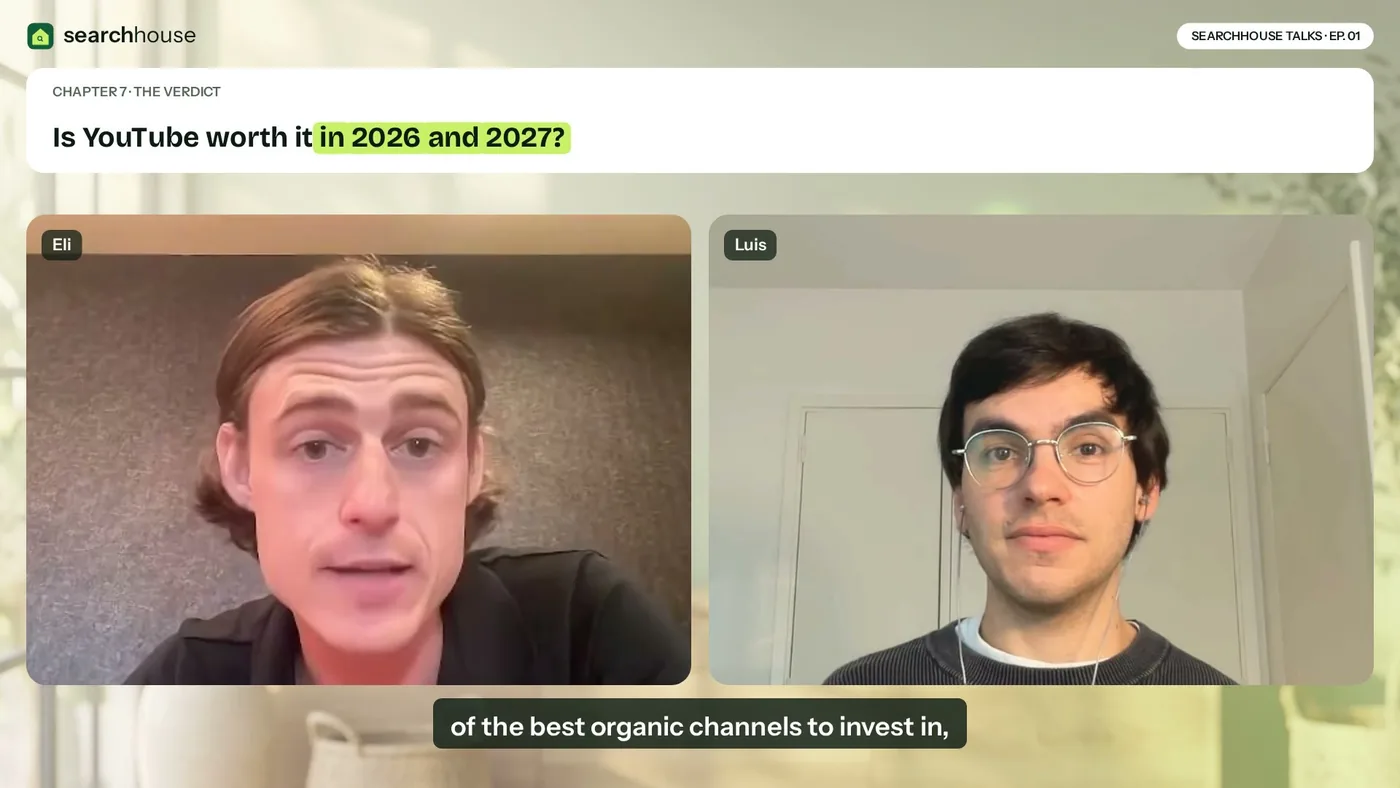
I would say YouTube is probably one of the best organic channels to invest in, especially going forward.
I would say YouTube is probably one of the best organic channels to invest in, especially going forward. And I would recommend it to everybody if they had the time and resources to do that. I will personally be doing that for the sites that I manage as well.
I think that most brands already know this. They don't know how to do it and they don't know how to incorporate it into an organic search channel. But if you can do that, it's the same with the blog writing. A lot of brands and companies are just not good at it.
They know they should be doing it. But it's just figuring out the right way to do that. And if you can figure that out and follow the guidelines and do it, it can be a highly successful channel. And a lot of sites and brands are even using that exclusively.
Get Your Brand on YouTube with Searchhouse
Want a channel like this one for your brand? At Searchhouse we take over your YouTube channel (or create one), book interviews and record them, process them into high-engagement long-form videos, get Shorts for YouTube, Instagram or TikTok, and create a blog (like this one) so you can expand your brand's presence out of a single foundational asset.
Sources (22)
- Google Search Central Blog: Google: beyond ten blue links
- YouTube Official Blog (press): YouTube #1 in US streaming
- Ahrefs: YouTube #1 in AI Overviews
- Ahrefs: AI Overviews cut blog clicks
- Ahrefs: New pages rarely rank fast
- Ahrefs: Top 10 pages are old
- Ahrefs: Cited without ranking
- Ahrefs: Transcripts drive AI visibility
- Google Blog (The Keyword): Google: 45% less junk
- Google Search Central: Scaled content abuse
- Ahrefs: AI trained on YouTube
- Graphite: Only 7% of #1s are AI
- Google Search Central Blog: Google: non-commodity content
- Google Search Central: Google: first-hand expertise
- Ahrefs: AI cites fresher content
- YouTube Official Blog: 1B podcast viewers on YouTube
- YouTube Official Blog (press): Shorts: 200B daily views
- Ahrefs: GPT-4: 1M hours of YouTube
- Profound: Short lists of sources
- Profound: AI cites videos, not channels
- Ahrefs: Keyword in the title
- Ahrefs: Brand mentions = authority